


Estimated reading time: ~7 minutes
Late December, when the nights stretch long and the world holds its breath between the turning of the year — the Little Bear in the sky lifts its paw and releases a gentle rain.
This is not a roar. It’s a soft whisper.
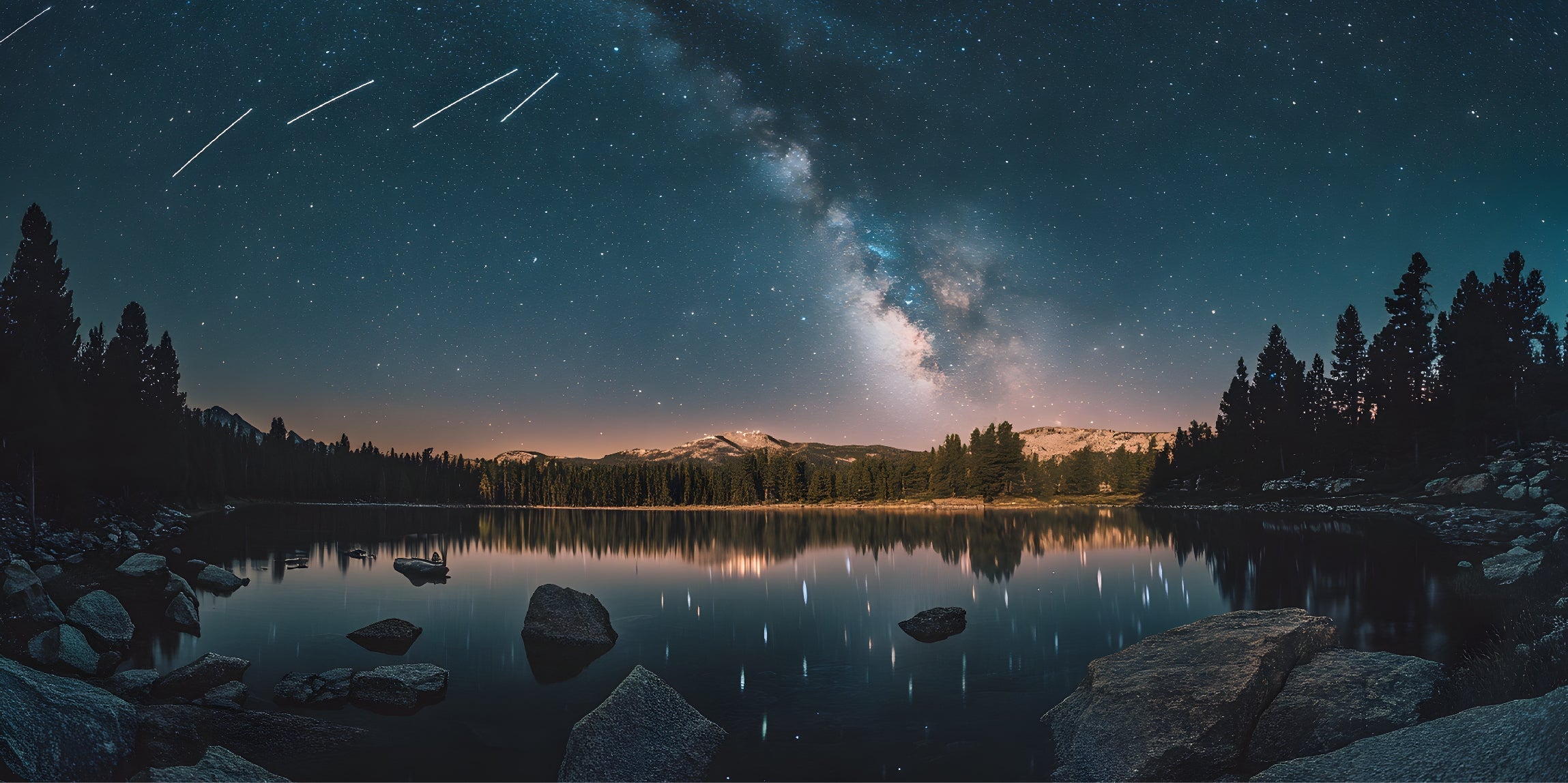
This is the Ursid meteor shower, peaking around December 21–22, a delicate last movement in the cosmic symphony as winter truly begins. Star Walk+1
1. The Bear’s Quiet Offering
In the constellation Ursa Minor, the North Star stands sentinel. Nearby, the radiant of the Ursids is tucked close, so each shooting star seems to fall from the very heart of the Little Bear’s fur.
These meteors are not wild blazing comets but tiny particles left behind by Comet 8P/Tuttle, drifting small and slow. SeaSky When they enter our atmosphere, they burn softly — more like glowing embers than fierce flames.
In 2025, the conditions are just right: the Moon is thin, the sky dark, and the shower’s peak offers a rare chance to see them glow in peaceful procession. Star Walk+2SeaSky+2
2. A Silent Vigil on the Longest Night
A young man stands on a wooden dock by a quiet lake far from the city, where water reflects the dark sky like a black mirror. The air is crisp; each breath is a soft plume. His coat is warm, but there’s something even warmer in his chest — a sense of waiting.
He climbs a few steps up a ladder to a small dive platform, lies flat on his back, and lets the stars fill his vision. Near the Little Dipper, he traces a line from the North Star to the faint curve of its tail.
He listens for something — not a sound, but a feeling. Because on this night, the sky is not asleep. It is breathing.
3. The Bear’s Whisper Becomes Light
Suddenly — a spark. A tiny streak of white glides across the sky, slower than a comet, softer than a flame. He watches it fade, and then another appears, and another. Each one is quiet, gentle, like a secret being shared.
They come in clusters, but never frantic. More like a conversation — a slow, meaningful exchange between the cosmos and the watcher.
He closes his eyes, imagining the journey of each grain of dust: how it must have traveled across ages, lingered in the cold vastness around its parent comet, and now, at the very edge of winter, becomes a falling star.
4. A Message from the Bear
To him, the Ursids speak of patience.
They tell him:
-
That not all journeys are grand; some are whispered.
-
That what lingers in the dark can still bring light.
-
That endings are gentle, not always blazing.
-
That some souls are steady, like a bear in the night — strong, quiet, unafraid of shadows.
He imagines the comet 8P/Tuttle, far away now, shedding tiny grains that drift for eons. Those grains, he thinks, are like memories — fragments that do not burn out all at once, but shine briefly when they meet us.
5. A Moment to Hold
When the last meteor fades, the young man sits up, his back against the wooden planks. The lake is still, the stars unmoving, the Bear once again whole in the sky.
He pulls out a small bracelet from his pocket — one made of black onyx and polished hematite, stones of endurance and calm — and rests it gently on his wrist again.
He whispers to the sky,
“Thank you for remembering.”
He doesn’t ask for more. He doesn’t wish for flashes of brilliance. He just watches, and waits.
6. Under the Enchanted Sky
The Ursids will not roar.
They will not flood the heavens.
They will come softly, like a benediction.
A final, delicate spell of light before the year turns.
This is not spectacle.
This is intimacy.
And for those who rise under the cold, quiet night of December — under the Bear’s gentle paw — the sky offers something rare: a whisper that lingers long after the meteor fades, a secret carried on the tail of a shooting star, and a reminder that even in darkness, the universe can speak softly… and be heard.
Share:
The Winter Lantern of the Sky
The Night the Sisters Spoke to the Moon