


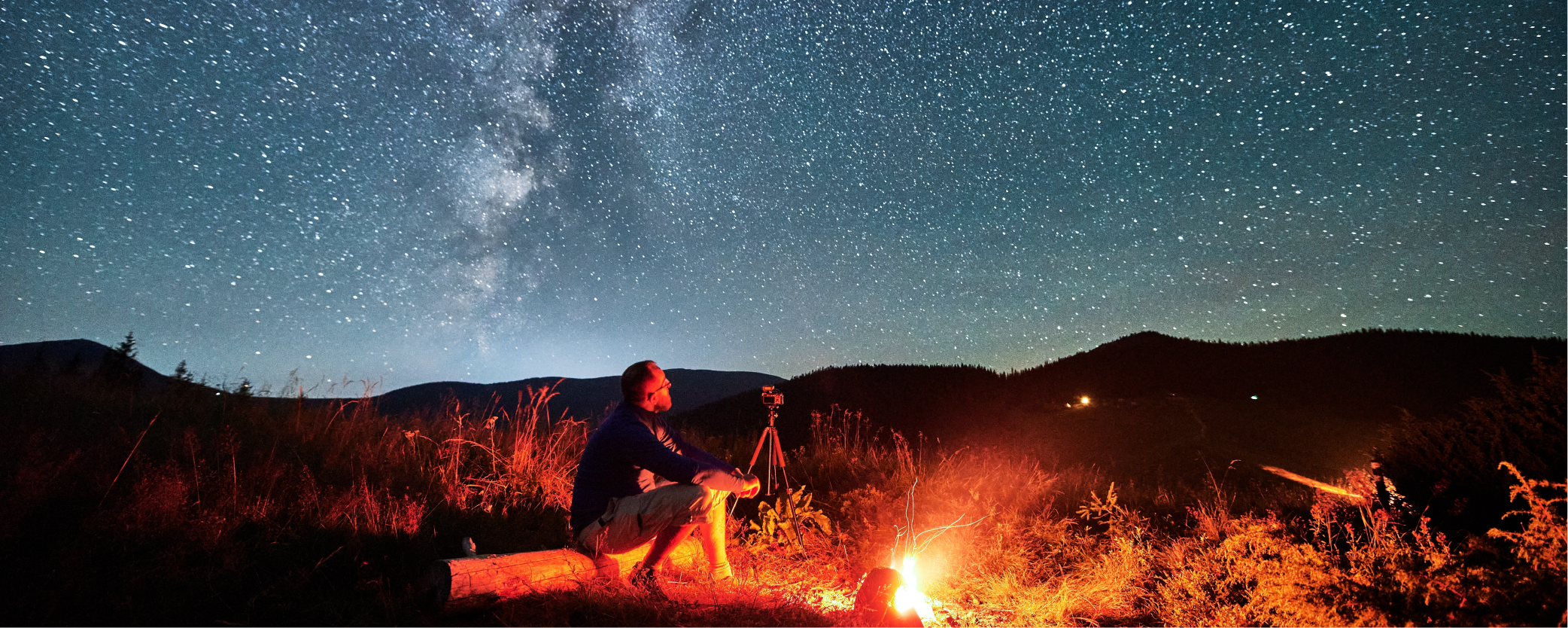
Milky Way Season (Late May 2026)
Estimated reading time: 6–7 minutes
There is a moment each year when the night sky begins to feel… deeper.
Not brighter. Not louder.
But quieter — in a way that invites you to stay a little longer.
From late May onwards, the great river of stars we call the Milky Way slowly returns to view, rising higher in the midnight hours. It does not announce itself. There are no crowds, no countdowns, no spectacle.
Only those who are willing to wait will see it.
And perhaps that is the point.
The Return of the Unseen
In cities like Singapore, the sky is often something we forget to look at. It is there—but distant, washed in light, reduced to a handful of familiar stars.
But beyond the city glow, in darker corners of the world, the Milky Way begins to stretch across the sky like a quiet memory resurfacing.
This is not just a cluster of stars.
It is structure. Depth. Time itself—visible.
What you are seeing is the dense core of our galaxy, thousands of light-years away, slowly rotating into view as the Earth shifts through its seasons. By midnight, it rises. By early morning, it stands tall—layered, textured, almost unreal.
And yet, it has always been there.
A Different Kind of Spectacle
Unlike meteor showers or full moons, the Milky Way does not reward urgency.
You cannot rush it.
You cannot glance and move on.
You have to sit with it.
Let your eyes adjust.
Let the darkness settle.
Let the noise in your mind slowly fade into the background.
Only then does it begin to reveal itself—not all at once, but in gradients:
- A faint dusting of stars
- A soft, cloudy band
- Then depth… and more depth behind it
It’s less like looking at the sky, and more like looking into it.
Why This Season Matters
Late May marks the beginning of a window—one that stretches through the middle of the year—where the night sky becomes more layered, more dimensional.
But more importantly, it marks a shift in pace.
The world around you grows brighter:
- Longer days
- Warmer evenings
- A subtle energy returning to daily life
And yet above it all, the night asks something different of you.
To slow down.
To stay.
To notice.
The Art of Staying Still
There is a quiet discipline in stargazing.
Not the technical kind—but the emotional one.
To sit without distraction.
To resist the urge to check your phone.
To be present in a way that feels unfamiliar at first.
This is where the Milky Way becomes more than an astronomical event.
It becomes a practice.
A reminder that not everything meaningful is immediate.
That some things only reveal themselves with patience.
In a way, it reflects the same philosophy found in wabi-sabi living—where beauty is not loud, not perfect, not forced.
It simply exists.
Bringing the Sky Closer to Home
You may not always have access to a dark sky reserve.
You may never see the Milky Way in its full clarity from where you are.
But the feeling it evokes—the stillness, the quiet attention—that can exist anywhere.
Even at home.
A dimly lit room.
A low seat.
A soft, grounded space where nothing demands your attention.
The sky does not need to be visible for you to feel its presence.
Sometimes, it’s about creating the same conditions within your own space:
- Less brightness
- Less noise
- More room to pause
A Season Begins, Gently
There are louder celestial events to come.
The longest day of the year.
Falling stars.
A full moon that will rise warm and golden at the end of June.
But this—this quiet return of the Milky Way—is where it all begins.
Not with a spectacle.
But with an invitation.
To look up.
To slow down.
To remember that some of the most beautiful things in life don’t demand to be seen.
They wait.
If you ever choose to go further, these are the places where the night sky reveals itself fully.
🌍 Top 5 Places to See the Milky Way (Late May Onwards)
🇳🇿 1. Aoraki Mackenzie Dark Sky Reserve, New Zealand
📍 Aoraki Mackenzie Dark Sky Reserve
Why it’s #1:
- One of the largest and darkest sky reserves on Earth
- Near-perfect conditions: low humidity, minimal light pollution
⏰ Best time: 12:00 AM – 4:00 AM
📅 Season: May → September
👉 This is the gold standard for Milky Way viewing
🇺🇸 2. Death Valley National Park, USA
📍 Death Valley National Park
Why it’s special:
- Vast, empty desert = zero visual obstruction
- One of the darkest places in North America
⏰ Best time: 11:00 PM – 3:00 AM
📅 Season: April → October
👉 Feels raw, cinematic, almost spiritual
🇯🇵 3. Nagano Highlands / Hokkaido Countryside, Japan
📍 Nagano Prefecture / Hokkaido
Why it fits your brand:
- Quiet rural landscapes
- Minimal light, poetic atmosphere
⏰ Best time: 10:30 PM – 2:00 AM
📅 Season: May → August
👉 This is Wabi-Sabi + sky combined
🇨🇱 4. Atacama Desert, Chile
📍 Atacama Desert
Why it’s world-class:
- Driest desert on Earth = unmatched clarity
- Home to major observatories
⏰ Best time: 11:00 PM – 4:00 AM
📅 Season: Year-round (best May–Oct)
👉 Possibly the clearest Milky Way visibility on Earth
🇦🇺 5. Uluru, Australia
📍 Uluru
Why it stands out:
- Deep cultural + spiritual presence
- Extremely low light pollution
⏰ Best time: 9:30 PM – 2:00 AM
📅 Season: May → September
👉 Not just visual—it’s emotional and grounding
Share:
🌌 May 6–7, 2026 — Eta Aquariids Meteor Shower: Celestial Rain of Spring
Summer Solstice–When the Light Lingers